
What you'll learn in this article
- The true purpose of a cafeteria, and the keywords operators focus on: "nutrition," "health," and "price"
- The real reason many cafeterias "don't increase menu variety" (queues and settlement)
- A lesson from the cafeteria at China Agricultural University, and how "weight-based settlement" works
- Data showing dishes chosen per person rose from an average of 2 to 6.2, and food waste fell by 85%
- The mindset tomorrow's smart cafeteria needs, and the conditions for being loved by its users
Student cafeterias and employee cafeterias are a welcome presence, offering warm meals at affordable prices.
So, what is the original purpose of a cafeteria?
What does a cafeteria exist for?
The purpose of a student cafeteria is to provide students and faculty with nutritionally balanced meals at affordable prices. It also serves as a community space where students can interact with one another.
The same is true for employee cafeterias. Providing healthy meals to employees is important because it leads to better health management, improved work efficiency, and enhanced welfare benefits.
In other words, for those who operate a cafeteria, the important keywords can be said to be "nutrition," "health," and "price."
But do those alone make a cafeteria beloved by its users?
Why do cafeterias become unpopular?
When you listen to the voices of students and employees, complaints about cafeterias are not uncommon.
When I think back on the cafeteria of my own student days, I have memories of being unsatisfied with the food.
Later, I went to work at a large company and used its employee cafeteria. It was more substantial than the student cafeteria, but the variety of dishes was not that great.
I imagine the cafeteria at that time had its own various circumstances.
So why is it that, at many cafeterias, increasing the variety of dishes is difficult?
One of the reasons is the lunchtime queue.
Reduce the queue by reducing menu variety?
At employee cafeterias, it is sometimes possible to spread out usage times according to work shifts.
At universities, on the other hand, many students eat lunch during the same time period. A large number of students must be served within a limited lunch break.
For that reason, eliminating the queue in front of the register is a very important challenge for university cafeterias.
At traditional cafeterias, the common method was for a cashier to check the dishes, enter the prices, and settle the bill.
Unlike supermarket products, dishes often do not have barcodes, so each one must be checked individually.
The more varieties of dishes there are, the more complex the checkout process can become.
As a result, the idea arises of narrowing down the variety of dishes in order to reduce the queue.
However, if the variety of dishes is small, the menu options available to users are also limited.
Reduce the variety of dishes in order to reduce the queue. Is that really the best approach?
A hint found in a Chinese university cafeteria
Curious about this question, I also did some asking around about university cafeterias in China.
In China, there is a saying: "To the people, food is heaven" (民以食為天).
It means that, for people, eating is more important than anything else.
Among China's large enterprises and government agencies, there are also cafeterias with generous welfare benefits that offer a rich variety of dishes. However, realizing such an environment requires a correspondingly large budget.
So I turned my attention to university cafeterias.
While talking with users of several university cafeterias, I learned that there was one cafeteria with a particularly high reputation.
That was the cafeteria at China Agricultural University.
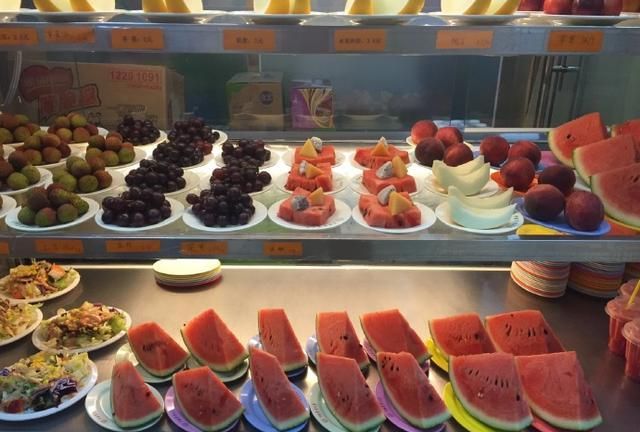
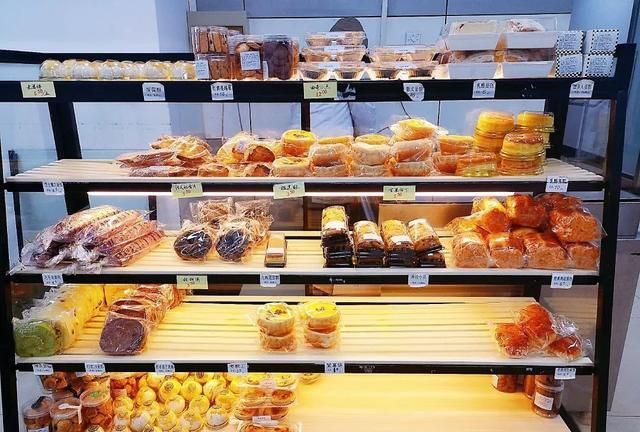
What is interesting about this cafeteria is that it works not only on making the variety of dishes abundant, but also on making the checkout process more efficient.
The dishes you like, in the amount you like
What deserves attention in this cafeteria's approach is the system that lets students choose the dishes they like themselves, and take only as much as they want.
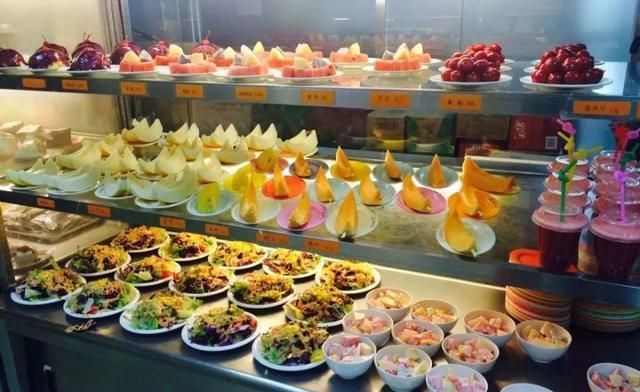
Rather than selecting a fixed set meal, they can freely combine what they want to eat from among a variety of dishes.
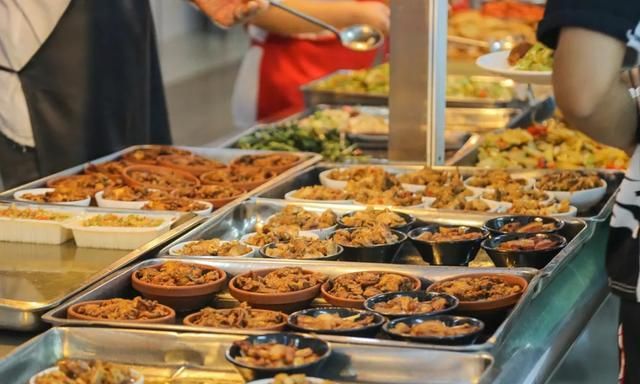
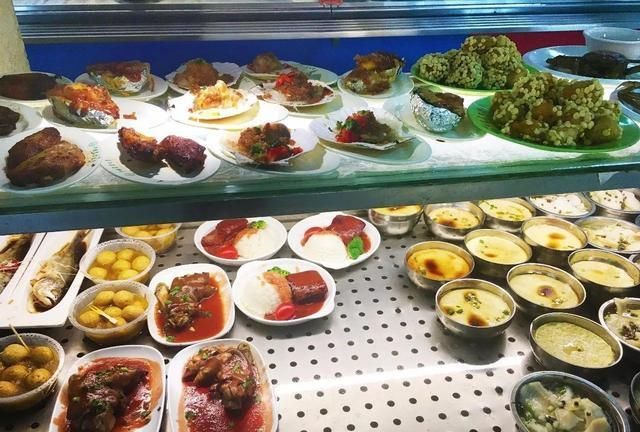
However, as the variety of dishes increases, settlement with the traditional register method takes a lot of time.
This is where "weight-based settlement," a method that automatically calculates the price based on the weight of the dishes, becomes important.
By measuring the weight when dishes are taken and calculating the price by the gram, it reduces the effort of identifying each dish one by one and entering prices.
In other words, it is a system that allows settlement without relying on the traditional register method, even as the variety of dishes increases.
This method also offers major benefits for users.
- You can freely choose the dishes you like
- You can take only as much as you want to eat
- You can adjust to your own appetite and budget
- The enjoyment of choosing dishes increases
A cafeteria is not merely a place to fill your stomach.
The enjoyment of choosing your meal to match your own preferences is also an important value.
Dishes per person: from 2 to 6.2 kinds. Food waste also cut by 85%
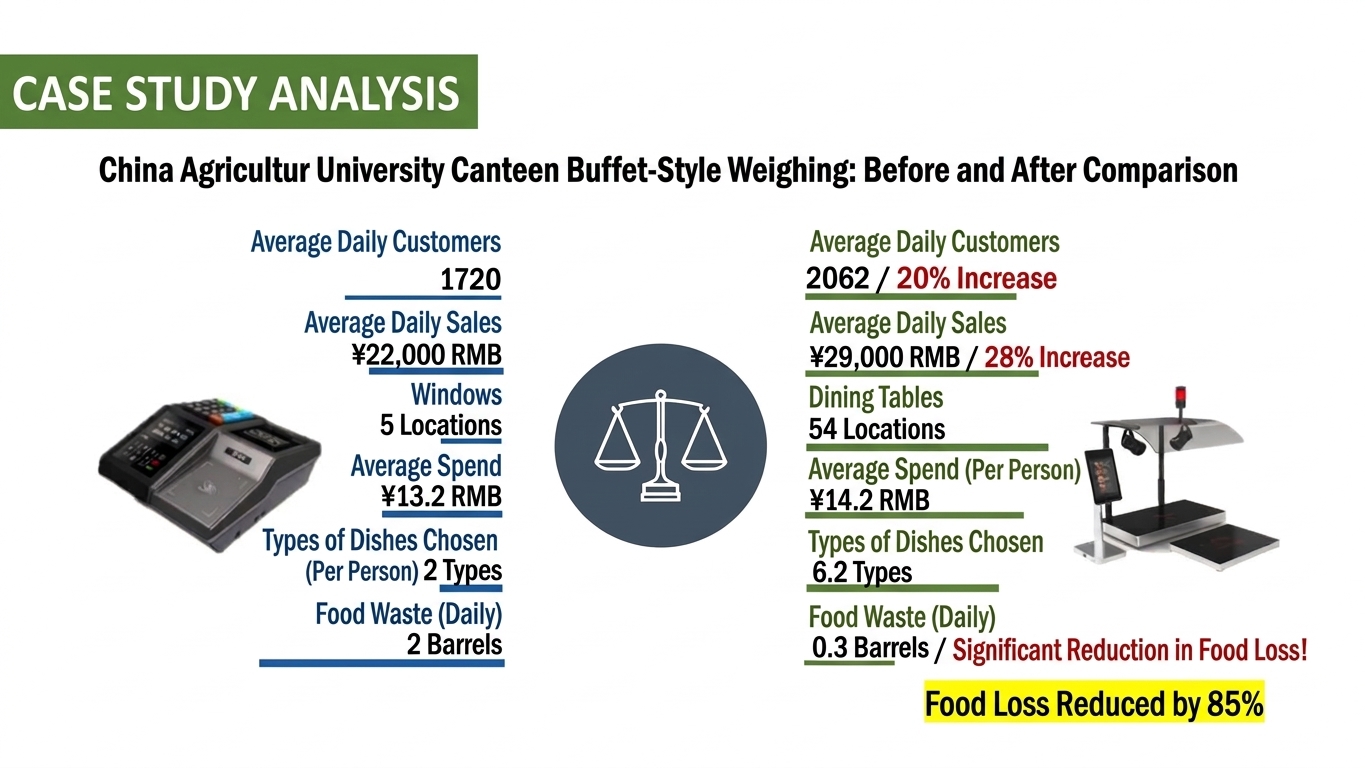
Regarding this initiative, the data introduced contains some interesting figures.
The number of dish varieties a student chooses in a single meal is said to have increased from an average of 2 to 6.2.
Furthermore, food waste is said to have fallen by 85%.
This is a case showing that a system letting people take the dishes they like in the amount they like broadened meal choices and also led to a reduction in food loss.
Of course, the actual effect will differ depending on the cafeteria's operating methods, menu composition, and so on.
Even so, this case gives us an important hint for solving cafeteria challenges.
Even without reducing the variety of dishes, by being creative with the settlement method, it may be possible to achieve both user satisfaction and cafeteria operational efficiency.
What tomorrow's cafeteria needs is to become smart
As we have considered so far, a cafeteria beloved by its users requires a variety of elements.
- Delicious food
- Nutritionally balanced meals
- Affordable prices
- Abundant choices
- Short waiting times
Especially at university and employee cafeterias where users are concentrated, it is important to achieve both "being able to choose the dishes you like" and "being able to eat without a long wait."
To do so, you need to review not only how dishes are served, but the cafeteria's entire mechanism — including ordering, weighing, checkout, and payment.
For example, a weight-based settlement system can measure the weight of dishes with an electronic scale and automatically calculate the price. Users can choose the dishes they want in the amount they want, and pay for exactly what they take.
Beyond streamlining register work, it can also be expected to reduce food waste and improve user satisfaction.
At Izumo Soan, to solve these challenges, we propose three smart settlement methods: AI image recognition, RFID, and weight-based settlement.
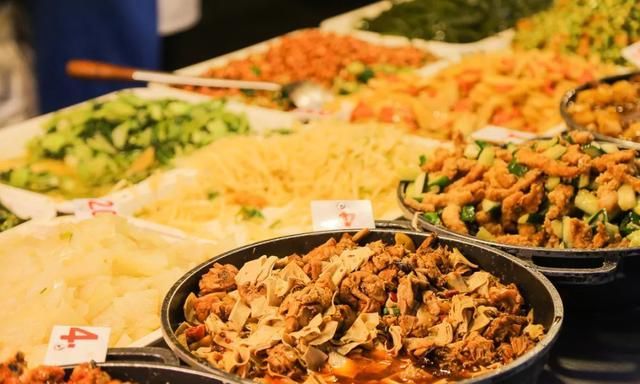
Among them, weight-based settlement is a solution suited to buffet-style and self-service cafeterias where diners freely choose their dishes.
For details, please see here.
Weight-Based Settlement Solution:
https://izumosoan.com/en/smart-cafeteria-weight.html
So, what kind of cafeteria is the most popular?
Finally, let's return to the original question.
Is the most popular one the cheap cafeteria? Or the cafeteria that provides healthy meals?
I don't think it's only that.
What's appealing to users is surely a cafeteria where you can eat the dishes you like, in the amount you like, at an affordable price, without a long wait, isn't it?
In addition to the "nutrition," "health," and "price" that cafeteria operators think about, we need to also turn our eyes to the "taste," "choices," and "waiting time" that users seek.
Not "reduce the dishes to reduce the queue," but "use technology to reduce the queue while increasing the variety of dishes."
Isn't that the kind of thinking tomorrow's smart cafeteria is being asked for?
A cafeteria is not merely a place that provides meals.
The fun of choosing — "What shall I eat today?" — the satisfaction of "that was delicious," and the comfort of "I got to eat without waiting."
It is only when all of these come together, I believe, that it becomes a cafeteria truly beloved by its users.
Weight-Based Settlement Solution Inquiry
Deliver "the dishes you want, in the amount you want," while reducing both queues and food waste.
Discover the weight-based settlement best suited to buffet and self-service cafeterias.